
Using Big Screen Math Games to Boost Student Engagement
Discover how projecting interactive math games onto a smartboard or classroom screen can boost student engagement, foster collaboration, and create a supportive learning environment.
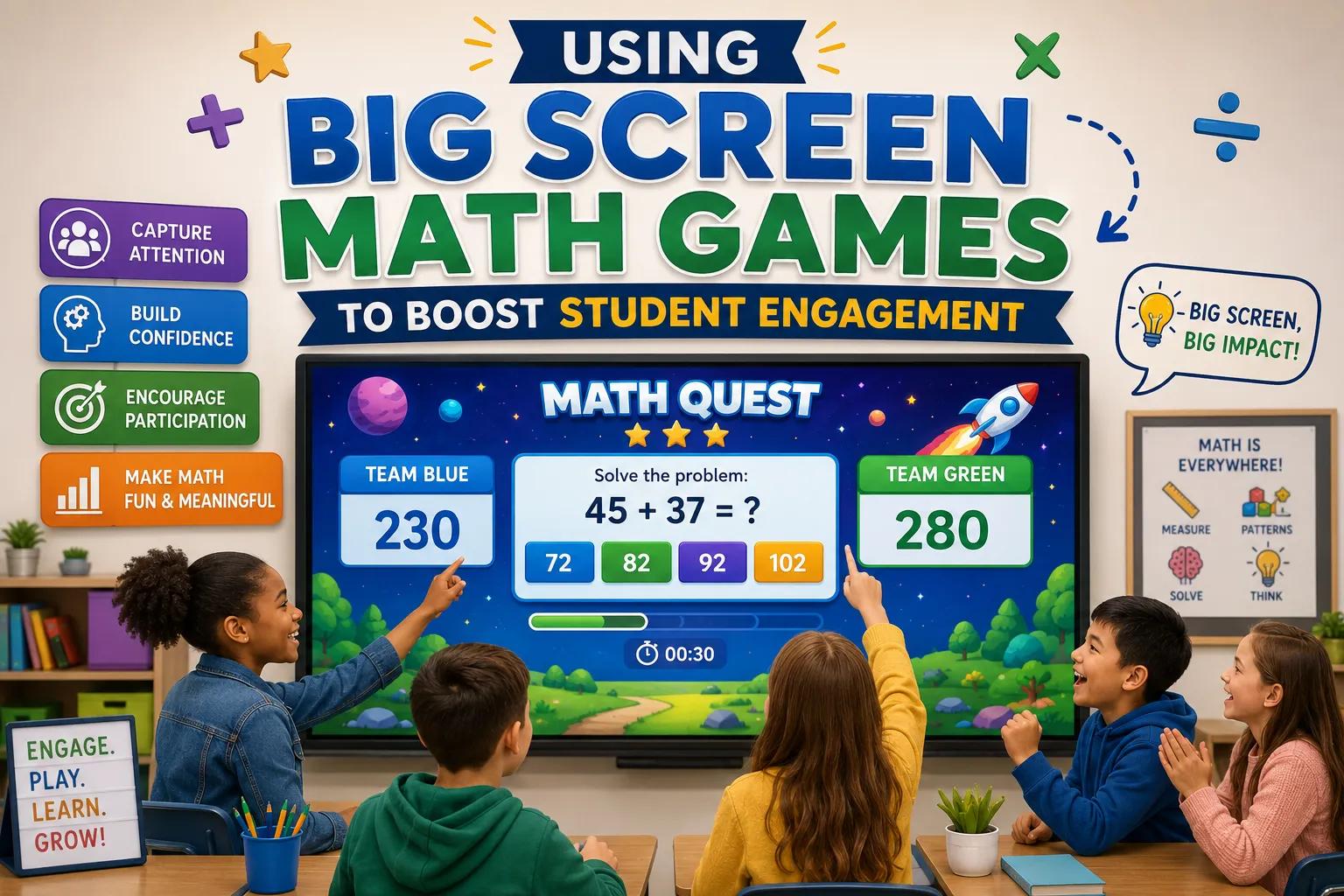
Introduction In recent years, classrooms have seen a massive push toward one-to-one device integration. While individual Chromebooks and iPads have their place, they can sometimes lead to isolated learning environments where students stare quietly at their screens.
If you want to inject energy, teamwork, and excitement back into your math lessons, it’s time to look up.
Projecting interactive math games onto a big screen—like a projector, smartboard, or interactive whiteboard—can completely transform your classroom dynamics. In this article, we explore the science behind big-screen gaming and how it can supercharge student engagement.
1. It Fosters Teamwork and Active Collaboration
When a student plays a game on their own tablet, they make decisions in isolation. However, when a math puzzle is projected on the big screen, it becomes a shared experience.
- Group Discussion: Students must talk to each other to solve complex problems. For example, during a logic grid game like Arrow Puzzle, the entire class can debate the best direction to place the next arrow.
- Collective Decision Making: Teachers can implement a voting system where the class decides on an answer together. This collaborative approach teaches critical thinking and explanation skills as students justify their choices to their classmates.
2. It Lowers Math Anxiety
Math anxiety is a real barrier for many young learners. The fear of getting an answer wrong in front of peers can cause students to withdraw.
- Shared Responsibility: When playing team-based games like MathTug (Red Team vs. Blue Team), wins and losses are shared by the group. An incorrect answer is not a personal failure; it is just a setback for the team that everyone works together to overcome.
- Gamified Fun: The focus shifts from "getting a grade" to "winning the game," which naturally lowers stress levels and encourages struggling students to participate without fear.
3. It Enhances Visual and Spatial Learning
Many math concepts are abstract and difficult to grasp on small sheets of paper. Big screens allow for larger, dynamic visual models.
- Manipulating Math: Smartboards allow students to physically drag, resize, and rotate objects with their fingers. Dragging clock hands, sorting shapes, or pulling a coordinate point onto a graph on a large screen makes math concepts tangible.
- Vibrant Animation: Large-scale animations capture visual attention better than static textbook pages, helping students retain mathematical structures and processes.
4. It Makes Classroom Management Easier
For teachers, keeping 25 students focused on their individual tasks can feel like a game of whack-a-mole.
- Single Focus Point: Projecting a game at the front of the room gives the entire class a single, shared focal point. It is much easier to monitor attention when all eyes are looking up at the board.
- Structured Play: Big-screen games provide structure. Teachers can control the pace of the game, pausing to explain difficult concepts or celebrating a team's successful strategy.
Tips for Running Big-Screen Games Successfully
To get the most out of your projector or smartboard games:
- Use Dry-Erase Boards: Have every student write down their answer on a small dry-erase board and hold it up. This ensures 100% participation, even when only one student is entering the answer on the smartboard.
- Keep it Fast-Paced: Choose games that have quick rounds so that students don't lose interest while waiting for their turn.
- Set Clear Expectations: Before starting, remind students of the rules regarding good sportsmanship and cheering volume.
Conclusion
Technology in the classroom doesn't have to mean isolated screen time. By utilizing your projector or smartboard for collective math games, you can turn your math block into a lively, collaborative, and joy-filled experience. Try projecting a game like MathTug tomorrow and watch your classroom light up!
Recommended Hands-on Math & Focus Tools
Top-rated learning tools on Amazon that support the strategies in this article:

📥 Get Our Free Classroom Math Puzzles & Worksheets
Enjoyed this guide? Join our educator community and receive weekly printable activities and mental math worksheets.
About the Author: Shubham
Math Educator & Developer
Shubham is a dedicated math educator and software engineer with a passion for gamifying education. He created MathTug to help teachers and parents utilize interactive digital games on smartboards and projectors to make math learning collaborative, active, and stress-free for kids.
Learn more about our educational mission on the About Us page →Enjoyed this post?
Share it with your colleagues or explore more fun ways to teach math on MathTug.
🎮 Play Games