
Math Anxiety: How Gamification Helps Kids Overcome Their Fear of Math
Math anxiety affects millions of children, causing them to lose confidence and withdraw. Discover how gamification and game-based learning can reduce stress and build math confidence.
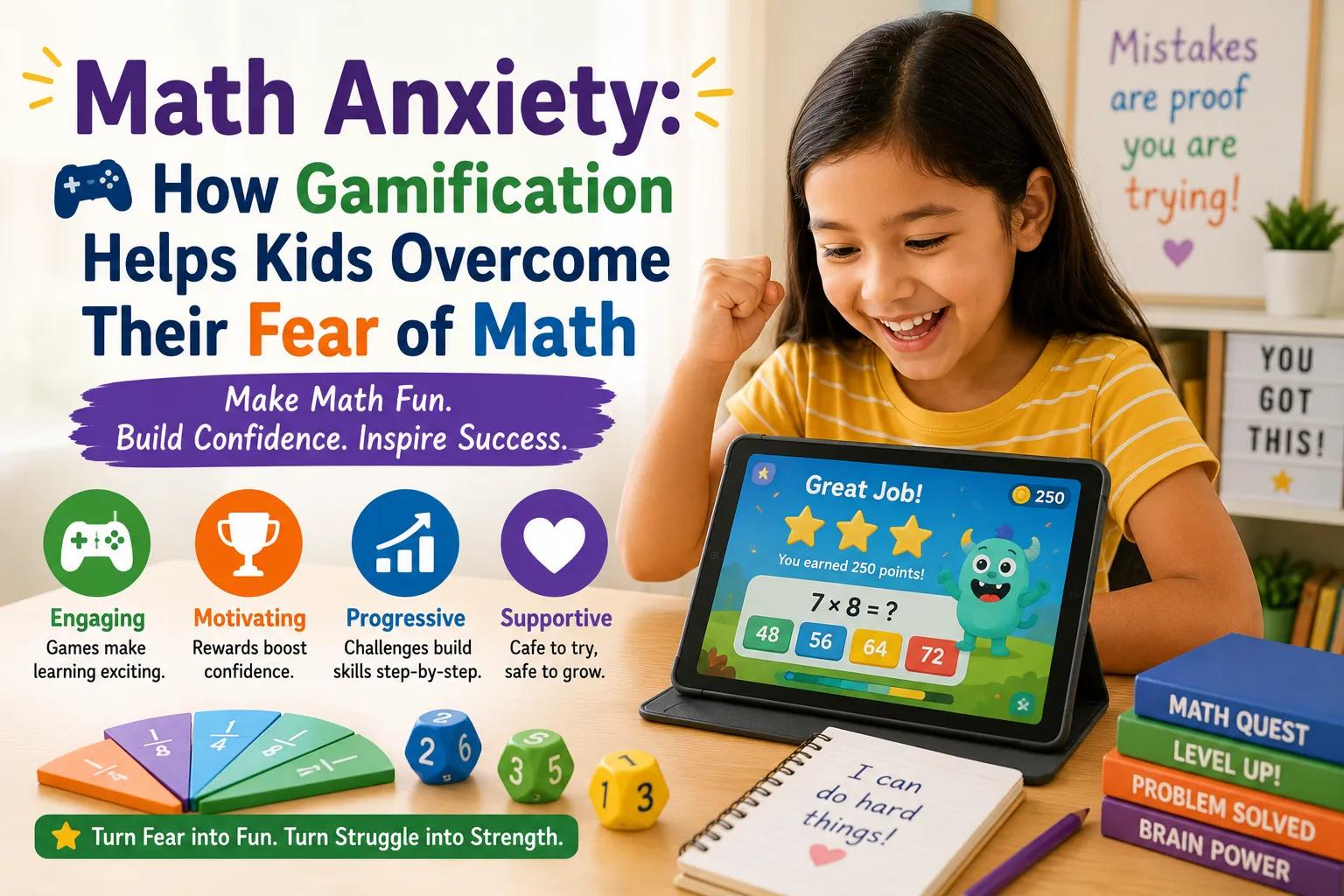
As an educator, the most heartbreaking thing I see is a child who is convinced they are "not a math person." Often, this belief starts as early as seven or eight years old.
It is rarely a reflection of their actual intelligence. Instead, it is the result of math anxiety—a feeling of tension, apprehension, or fear that interferes with math performance.
Math anxiety can cause physical symptoms, like sweaty palms, a racing heart, and a feeling of "blanking out" during tests.
I developed MathTug because I wanted to create a safe learning environment where math felt like a game rather than an interrogation.
Gamification—using game elements like points, progress bars, team battles, and visual feedback in learning—is one of the most effective tools we have to dismantle math anxiety. Here is how gamification helps kids overcome their fear of math.
1. It Shifts the Focus from "Grades" to "Goals"
In a traditional math setting, every mistake is penalized. A red mark on a test feels like a permanent stamp of failure.
- The Game Mindset: In games, mistakes are treated differently. When a player fails a level in a video game, they don't give up. They immediately press "restart" because they know failure is just part of the loop.
- Overcoming Fear: Gamified math platforms borrow this loop. If a student gets an answer wrong in a game like MathTug, their character doesn't fail; they just lose a bit of ground and try the next question. This lowers the stakes and makes trying again feel natural.
2. It Reduces the Pressure of Time
One of the primary causes of math anxiety is timed tests. Asking a child to solve 50 multiplication problems in 2 minutes induces panic, not fluency.
- Active Engagement: Gamification introduces challenges that keep kids focused on the task rather than the clock. For example, during a team game, they are focused on helping their team pull the rope, not on a ticking clock.
- Natural Speed: As their anxiety drops, their processing speed naturally increases. They build speed through comfortable repetition, not fear.
3. It Turns Isolated Struggles into Shared Triumphs
Math is often taught as an isolated activity. A student sits alone at a desk, struggling with a difficult problem, feeling like they are the only one who doesn't understand.
- Cooperative Play: By using big-screen games like MathTug, math becomes a team sport.
- Peer Support: In a team setting, students who are confident in math naturally help their teammates. The student who was struggling is no longer isolated; they are part of a team working together to solve a puzzle.
4. It Provides Instant, Constructive Feedback
Waiting a week to get a graded worksheet back does nothing for a student’s learning. By the time they see their mistakes, they have already forgotten the problems.
- Real-Time Correction: Gamified math games provide instant feedback. If an answer is wrong, the game shows the correct answer immediately or adjusts the difficulty level.
- No Shame: Because the feedback is automated and private (or shared as a group action), it removes the public shame of getting a question wrong in front of the teacher.
How Teachers and Parents Can Gamify Math
- Introduce Low-Stakes Games: Start math sessions with a quick, fun game like MathTug or Arrow Puzzle to warm up their brains and set a positive, low-stress tone.
- Celebrate Effort and Progress: Focus on growth, like completing a new game level or showing great teamwork, rather than perfect test scores.
- Keep it Playful: Use math in board games, card games, and everyday cooking measurements. Show kids that math is a practical, playful tool, not a set of rigid rules.
Conclusion
Math anxiety is a learned response, which means it can be unlearned. By incorporating gamification, play, and group cooperation into our math routines, we can show kids that math is an exciting puzzle to solve, not a test to fear. Let's make math fun again!
Recommended Hands-on Math & Focus Tools
Top-rated learning tools on Amazon that support the strategies in this article:
📥 Get Our Free Classroom Math Puzzles & Worksheets
Enjoyed this guide? Join our educator community and receive weekly printable activities and mental math worksheets.
About the Author: Shubham
Math Educator & Developer
Shubham is a dedicated math educator and software engineer with a passion for gamifying education. He created MathTug to help teachers and parents utilize interactive digital games on smartboards and projectors to make math learning collaborative, active, and stress-free for kids.
Learn more about our educational mission on the About Us page →Enjoyed this post?
Share it with your colleagues or explore more fun ways to teach math on MathTug.
🎮 Play Games